Trade-in appraisal: a step-by-step guide to a reliable inspection in about 15 minutes
A practical walkthrough for sales and used-car teams: documents, walkaround, interior, tyres, fault codes and test drive, then from condition to offer.
The trade-in appraisal is where a used car's margin is decided. Offer too much and the margin disappears in reconditioning; offer too little and the customer walks away, sometimes with the new-car sale.
This guide sets out a simple order of work that any member of the team can follow. Done this way, a complete appraisal fits in about 15 minutes.
Before you start
Ask the customer for the keys, the registration certificate and the service record, and take the mileage. A clear, steady routine reassures the customer: they can see the offer is built on facts.
The seven steps
1. Documents and identity
Check that the VIN on the registration certificate matches the one on the car. Note the date of first registration, the service history and, if the car is over four years old, the latest roadworthiness test report. A certificate of administrative status confirms there is no finance claim or opposition.
2. Exterior walkaround
Go round the car in the same order every time and photograph each side, the front, the rear and the roof if you can. Look along the panels against the light: dents and paint differences show better at an angle. Note every damage and take a close-up.
3. Glass, lights and wheels
Check the windscreen for chips and cracks, every light, and the wheels for kerb marks.
4. Tyres
Check the tread depth on all four tyres and look for uneven wear, which can point to an alignment problem. Four tyres to replace is a cost the offer must reflect.
5. Interior
Seats, steering wheel, gear knob and headlining show real use better than the odometer. Note stains, tears, smells and missing items such as the second key or the parcel shelf.
6. Warning lights and fault codes
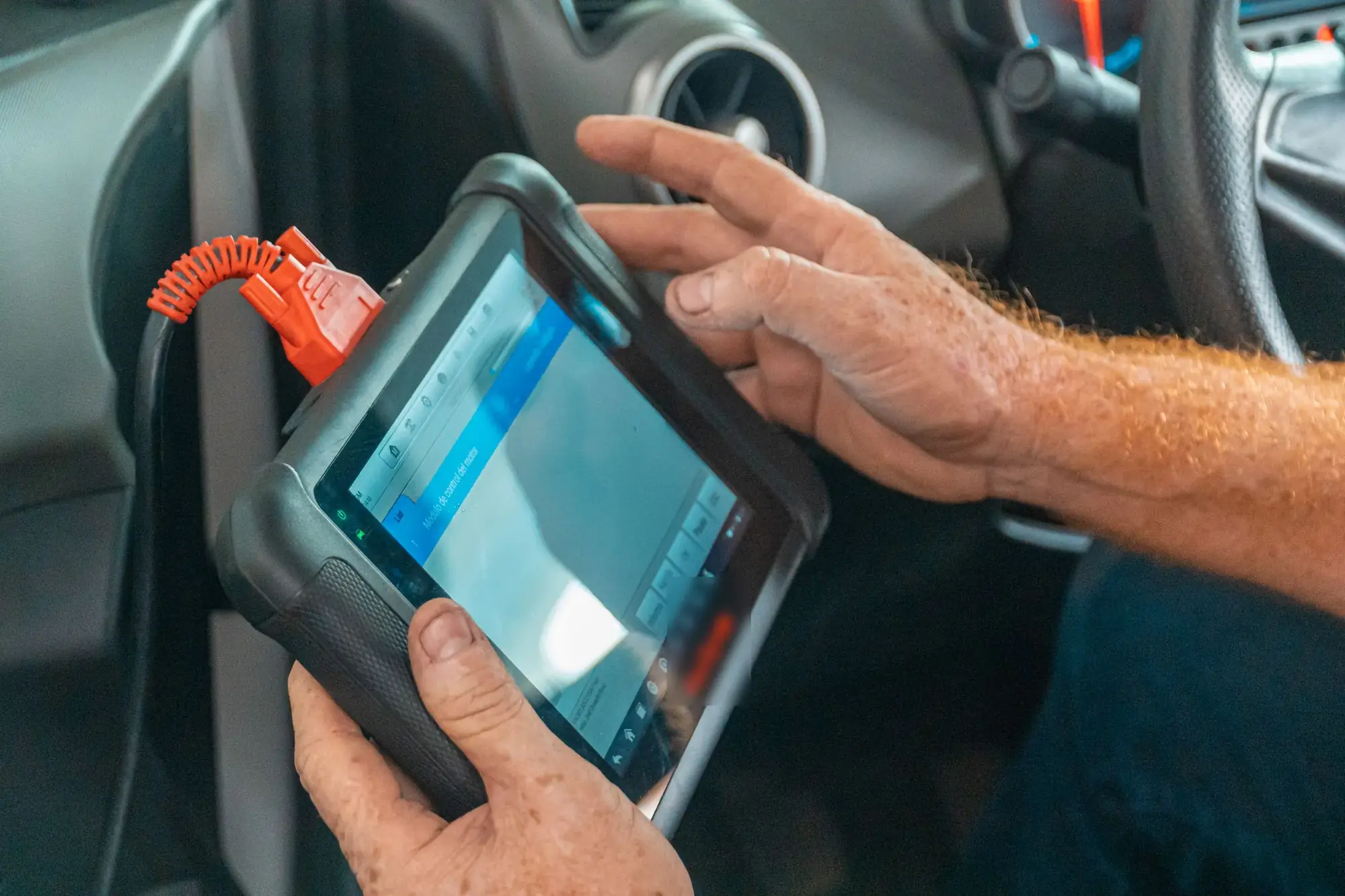
Start the engine and check that the warning lights go out. A diagnostic reader on the OBD port shows stored fault codes the dashboard no longer displays.
7. A short test drive
A few minutes are enough to check the clutch or gearbox, the brakes, the steering and any unusual noise.
From condition to offer
Each damage noted becomes an estimated repair cost. Take the car's market value, subtract the reconditioning cost and the time it will take to sell, and you have an offer you can explain line by line to the customer.
An offer you can explain is an offer the customer accepts.
How Steer Autos helps
Steer Autos guides the capture on a phone, detects damages on the photos with DeepDiag and turns them into a report and a repair estimate. Our teams measure the full appraisal at around 15 minutes, five times faster than a manual check.
Do you inspect, price or sell used cars?
See how Steer Autos makes your inspections reliable and speeds up your remarketing, on your own cars.