AI vehicle inspection in 2026: from photos to decisions you can trust
Inspection is no longer a back-office checkbox. Here is how guided capture, damage detection and structured reports turn a walk around the car into a decision the whole team can rely on.
Every used car that enters a business is inspected at least once: at trade-in, on arrival at the site, before reconditioning, before it goes online. For years that step relied on one person's eye, a paper sheet and a handful of photos taken in whatever light was available.
In 2026 the question has changed. It is no longer whether to inspect, but how to inspect the same way every time, so that the person pricing the car, the person reconditioning it and the buyer all read the same facts.
Why inspection became a strategic step
The condition of a car drives almost every decision that follows: what to offer at trade-in, which repairs to make, which channel to sell it through and at what price. When two inspectors describe the same car differently, each of those decisions inherits the doubt. Consistency, not speed alone, is what inspection now has to deliver.
The four links of a reliable inspection
1. Guided capture
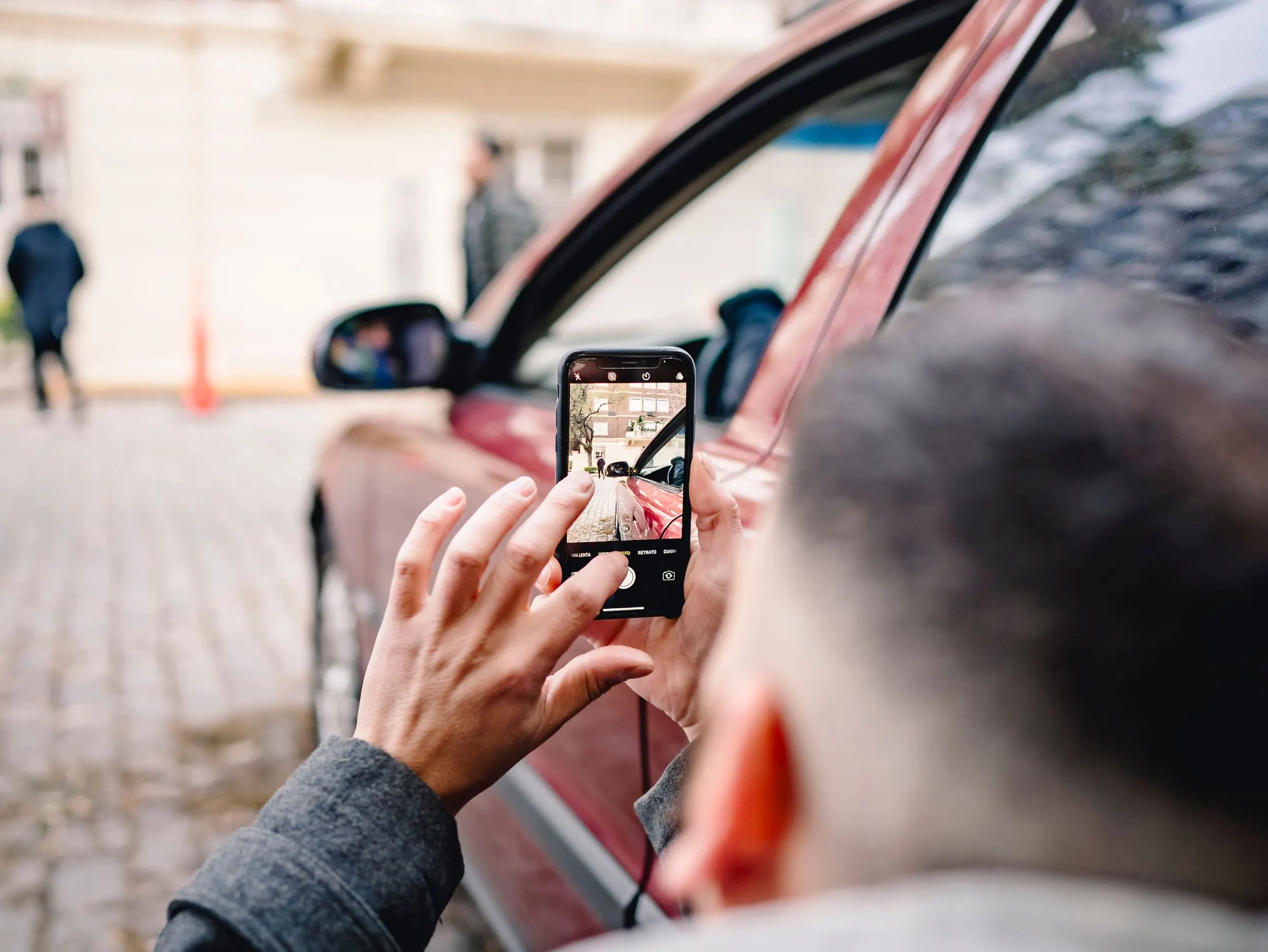
Good decisions start with good photos. A guided flow tells the operator which angles to take, in which order, and checks framing and light before moving on. The result is a complete, comparable set of images, whoever holds the phone.
2. Damage detection
AI models then review every photo for scratches, dents, cracks and missing parts, and place each finding on the panel where it sits. The operator confirms or corrects; nothing is decided by the model alone.
3. A structured report
Findings become a report with the same layout for every car: panels, severity, photos as evidence. Structured data can be compared, searched and shared, which a free-text note never allows.
4. The decision
The report is only useful if it feeds the next step: an estimated repair cost, a trade-in offer, a listing. That is where inspection stops being a cost and starts protecting margin.
An inspection is worth what the next person can do with it.
Where to start
- Write down the photo set you expect for every car, and make it the only accepted one.
- Agree on a shared scale for damage severity, so that "light scratch" means the same thing on every site.
- Keep the photos with the report, so any finding can be checked later.
- Measure the time from arrival to listing: it shows quickly where inspection slows the flow.
Steer Autos, powered by DeepDiag, follows this chain from capture to decision. Our teams measure an inspection at around 15 minutes, five times faster than a manual check.
Do you inspect, price or sell used cars?
See how Steer Autos makes your inspections reliable and speeds up your remarketing, on your own cars.